



When Rapid Prototyping 3D Printing Services Save Time
When deadlines tighten and iteration costs rise, rapid prototyping 3D printing services help teams validate designs faster, reduce waste, and improve cross-functional decisions. For manufacturers, buyers, engineers, and business leaders navigating Supply Chain digital transformation, this article explains when rapid prototyping creates real time savings, how it supports Supply Chain Management best practices, and why it matters in today’s data-driven industrial landscape.
The short answer is this: rapid prototyping 3D printing services save time when a team needs to test, communicate, approve, or correct a design before tooling, procurement, or full-scale production begins. They are especially valuable when the cost of waiting is higher than the cost of making a prototype. For engineers, they reduce iteration cycles. For procurement and business teams, they improve supplier alignment and lower decision risk. For project leaders, they shorten the path from concept to validated action.
When do rapid prototyping 3D printing services actually save time?
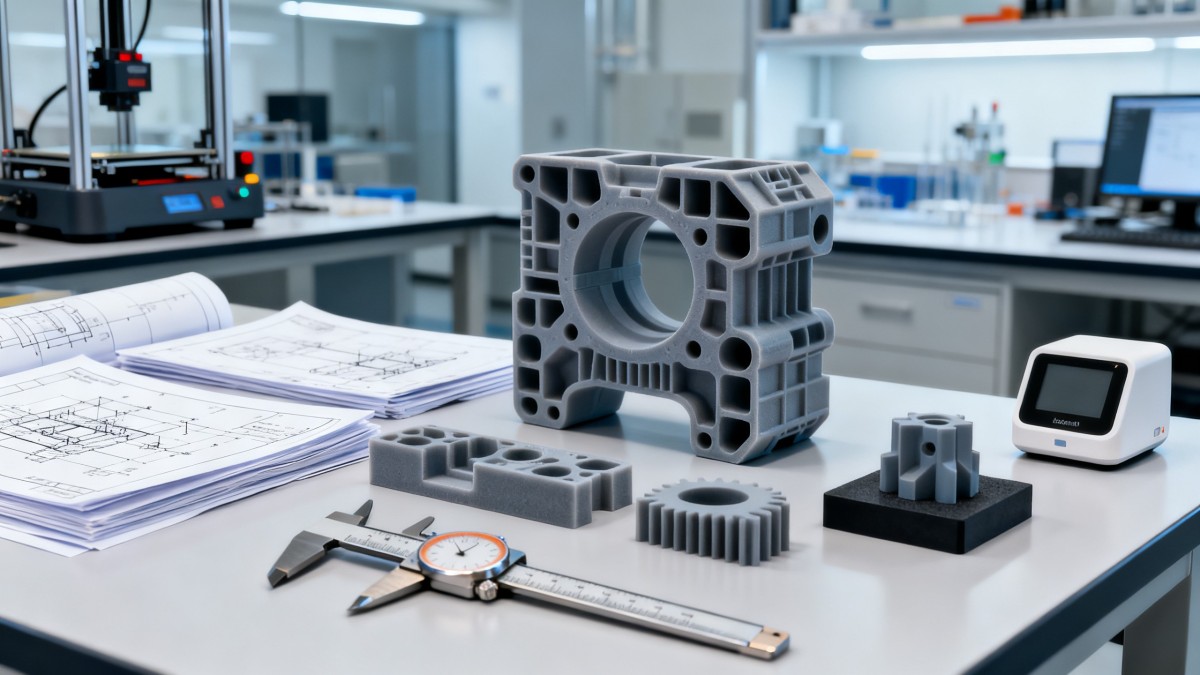
Not every project needs additive manufacturing, but many projects lose time because teams wait too long to physically validate a design. Rapid prototyping 3D printing services are most useful when speed matters more than perfect final-part economics.
They typically save time in these situations:
- Early design validation: Teams need to confirm dimensions, fit, ergonomics, or assembly logic before investing in molds, dies, or machining.
- Frequent design changes: Products are still evolving, so making traditional tooling too early creates rework and delay.
- Cross-functional review: Engineers, quality teams, buyers, end users, and decision-makers need a physical model to align faster.
- Complex geometry: Parts with internal channels, lightweight structures, or difficult shapes can be tested quickly without elaborate setup.
- Supply chain uncertainty: When lead times from conventional suppliers are unstable, a prototype service can keep development moving.
- Low-volume trial runs: Teams need pilot parts, fixture concepts, or pre-production samples without waiting for hard tooling.
In practical terms, the biggest time savings often do not come from printing itself. They come from avoiding slow decision loops. A prototype makes issues visible earlier, which helps teams stop debating assumptions and start acting on evidence.
What problems do target readers usually want solved?
Across industries, the search intent behind this topic is rarely just “What is rapid prototyping?” Readers usually want to know whether a 3D printing service will help them move a project forward faster and with less risk.
Here is what different stakeholders care about most:
- Information researchers and technical evaluators: Which use cases are valid, what methods are available, and what are the trade-offs?
- Operators and engineers: How quickly can they get a part, test it, modify it, and reprint?
- Procurement and commercial evaluators: Does it reduce total development delay, supplier dependency, and hidden costs?
- Enterprise decision-makers: Will it improve speed-to-market, lower project risk, and support digital transformation goals?
- Quality and safety managers: Is the prototype accurate enough for inspection, fit testing, workflow planning, or early risk review?
- Project managers: Can it compress schedules, improve communication, and reduce late-stage redesign?
- Distributors and agents: Can faster sample development improve customer response speed and win rates?
That means a strong evaluation should focus less on hype and more on timing, decision quality, iteration speed, and business impact.
Where does the time saving really come from?
Many organizations assume the benefit is only faster part fabrication. In reality, rapid prototyping 3D printing services save time across the whole product and supply chain workflow.
1. Faster design iteration
A digital file can move from CAD to a physical part in hours or days instead of waiting weeks for conventional prototype methods. This lets teams test multiple variations quickly.
2. Earlier error detection
Fit issues, assembly conflicts, clearance problems, and usability flaws are easier to spot when the part is physical. Finding these issues before tooling can save far more time than the print process itself.
3. Better communication across functions
Drawings and renderings do not always translate well between engineering, sourcing, sales, quality, and customers. A printed prototype reduces ambiguity and accelerates approvals.
4. Reduced tooling delay
For plastic and metal parts, traditional tooling can be a major schedule bottleneck. Prototypes allow teams to validate core assumptions before committing to that timeline.
5. Improved supplier coordination
Physical prototypes help contract manufacturers and suppliers understand design intent earlier, which can prevent late questions, quote revisions, and production misunderstandings.
6. More confident go/no-go decisions
Decision-makers often need evidence before funding the next project stage. Rapid prototypes provide a low-friction way to evaluate feasibility without waiting for a final production setup.
Which applications benefit the most?
Rapid prototyping 3D printing services can support nearly every industry, but they create the most value where development speed and iteration quality directly affect revenue, compliance, or operational performance.
- Advanced manufacturing: Part fit checks, tooling concepts, jigs, fixtures, assembly aids, and machine interface validation.
- Bio-pharmaceuticals: Device housings, ergonomic studies, packaging checks, lab equipment accessories, and workflow simulation models.
- Global logistics: Packaging prototypes, material handling aids, replacement part evaluation, and warehouse process mockups.
- Digital marketing: Product mockups for launches, trade show demos, customer samples, and concept visualization.
- Green energy: Enclosure prototypes, airflow concepts, cable routing components, mounting interfaces, and pilot hardware reviews.
In all of these sectors, the common pattern is clear: if a prototype helps teams make a better decision sooner, it is saving time even before production starts.
How should buyers and project teams judge whether a 3D printing service is worth using?
A useful evaluation framework is not “Is 3D printing faster than every other process?” but rather “Will this service shorten our path to a confident decision?”
Ask these questions:
- What is the cost of waiting? If one week of delay affects launch timing, engineering resources, customer response, or internal approvals, speed has measurable value.
- How likely is design change? The higher the expected iteration rate, the more value rapid prototyping provides.
- Do we need functional testing or only visual review? Material and process selection should match the actual purpose.
- Is tooling commitment premature? If the design is not stable, a prototype helps avoid expensive downstream changes.
- How many stakeholders need alignment? The more parties involved, the more a physical part can reduce communication delays.
- What level of dimensional accuracy and finish is needed? Service choice depends on whether the part is for concept review, fit testing, or limited functional use.
For procurement teams, this approach also improves supplier discussions. Instead of comparing only unit price, they can compare turnaround time, process suitability, revision responsiveness, file review support, and quality consistency.
What are the limits and when might it not save time?
Rapid prototyping is valuable, but it is not automatically the fastest path in every scenario.
It may deliver less benefit when:
- The design is already mature and standard machining is immediately available.
- The part requires exact production-grade material behavior that the selected prototype process cannot replicate.
- The team uses prototypes without clear test objectives, leading to repeated but unfocused iterations.
- The service provider lacks engineering support, causing file issues or preventable print failures.
- The organization confuses prototype validation with production readiness.
In other words, 3D printing saves time when it is used to answer the right questions early. It saves less time when teams expect it to replace every downstream production process.
How does it support Supply Chain Management and digital transformation?
For organizations pursuing Supply Chain digital transformation, rapid prototyping 3D printing services are more than a design tool. They are part of a faster, more connected decision system.
They support modern Supply Chain Management by:
- Reducing development friction: Digital files move quickly between design teams, service providers, and manufacturing partners.
- Improving traceability: Prototype revisions can be documented, compared, and linked to approval workflows.
- Supporting distributed collaboration: Global teams can evaluate the same design intent with less delay.
- Lowering inventory risk in early phases: Teams avoid premature stocking of parts or tooling while requirements are still changing.
- Enabling smarter sourcing decisions: Prototype feedback can refine final manufacturing specifications before RFQ and supplier nomination.
This matters in volatile markets. When supply chains face material shortages, geopolitical risk, or sudden demand changes, organizations need tools that preserve momentum. Rapid prototyping helps maintain project flow even when traditional procurement timelines are uncertain.
What should a good rapid prototyping partner provide?
If the goal is time savings, the service partner matters as much as the technology. A strong provider should offer more than machine access.
Look for these capabilities:
- Fast and realistic lead times
- Clear process guidance for SLA, SLS, FDM, MJF, metal printing, or other suitable methods
- DFM-style feedback before printing to prevent avoidable issues
- Material options aligned with test goals
- Consistent dimensional quality
- Post-processing support when appearance or handling matters
- Responsive communication for engineering and procurement teams
The best service providers help customers choose the fastest path to useful validation, not just the fastest path to producing any part.
Practical takeaway: when should you use rapid prototyping 3D printing services?
Use them when a physical part can accelerate learning, approval, or coordination before production commitment. That includes early concept reviews, fit and form checks, limited functional testing, customer demos, packaging trials, assembly planning, and supplier alignment.
If the next best alternative is waiting on tooling, debating over drawings, or risking a late-stage redesign, rapid prototyping 3D printing services are often the faster and smarter option. Their real value lies in compressing uncertainty, not just manufacturing a sample.
For industrial teams under pressure to move faster without increasing risk, that is why rapid prototyping continues to matter. It connects design intent, business judgment, and supply chain execution in a way that supports better decisions at the right time.
In summary, rapid prototyping 3D printing services save time when they help teams validate sooner, iterate faster, and commit later with more confidence. For engineers, procurement professionals, quality teams, and business leaders, the key question is not whether 3D printing is trendy, but whether it shortens the path to a reliable decision. In many modern industrial workflows, the answer is yes.
Related News
Get weekly intelligence in your inbox.
No noise. No sponsored content. Pure intelligence.
