



Clean Energy Project Financing Mistakes That Slow Deals
Clean energy project financing delays rarely happen because one party “just moved slowly.” In most cases, deals stall because developers, lenders, investors, EPC teams, and buyers discover avoidable gaps too late—unclear revenue assumptions, weak risk allocation, incomplete diligence, unrealistic schedules, or supply chain exposure that was not priced correctly. For companies evaluating projects, funding partners screening opportunities, and project teams trying to keep approvals on track, the fastest way to protect deal velocity is to identify these mistakes early and correct them before they reach credit committees, investment boards, or final documentation.
In today’s market, where supply chain risk management, digital reporting, and cross-border procurement all affect project bankability, financing is no longer just about finding capital. It is about presenting a project that can survive scrutiny. Below are the most common clean energy project financing mistakes that slow deals, why they matter, and what disciplined teams do differently.
Why do clean energy financing deals slow down even when a project looks strong on paper?
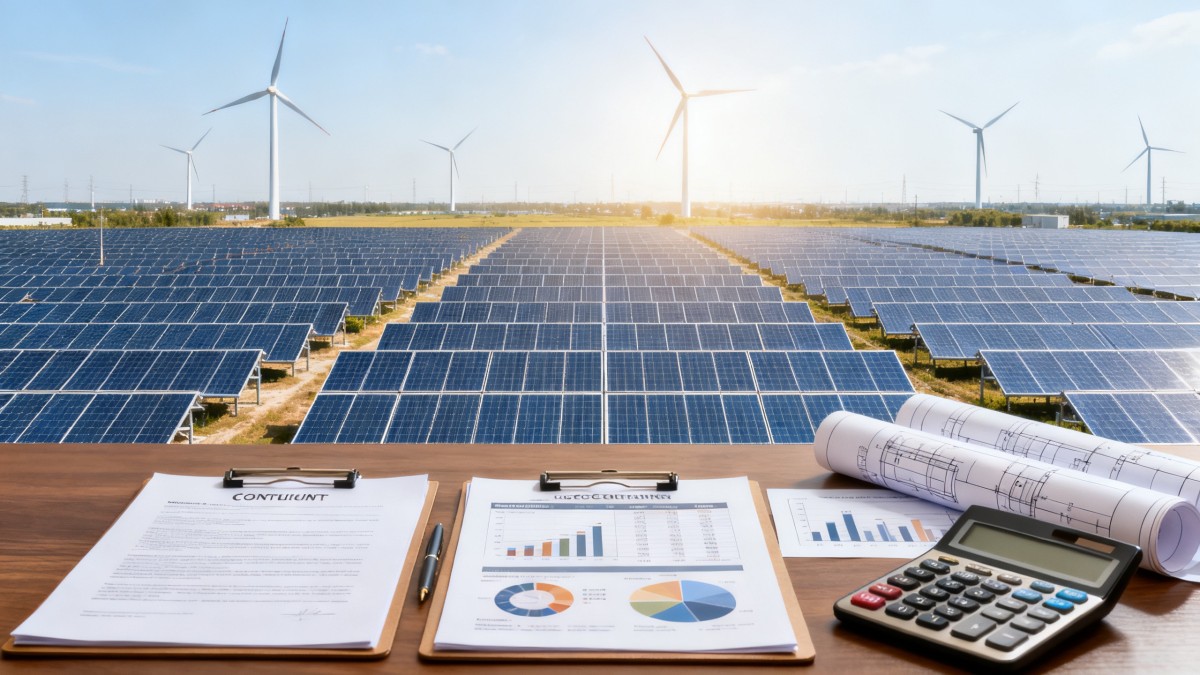
The core reason is simple: a project may appear commercially attractive, but financiers underwrite risk, not ambition. A solar, wind, storage, hydrogen, or broader clean energy project can show strong market potential and still face delays if the financing case is incomplete, inconsistent, or difficult to validate.
Most deal slowdowns happen when one or more of the following are true:
- The project economics depend on assumptions that are not fully evidenced.
- Key contracts are still being negotiated while financing discussions are already advanced.
- Technical, regulatory, grid, land, or permitting risks are not allocated clearly.
- Supply chain dependencies create cost, schedule, or performance uncertainty.
- Project data is fragmented across legal, engineering, procurement, and financial teams.
For lenders and investors, these issues raise a basic question: “Can this project still perform if conditions change?” If the answer is not clearly supported, approvals slow, diligence expands, and pricing can worsen.
Mistake 1: Treating financing as a late-stage exercise instead of a project design discipline
One of the most common clean energy project financing mistakes is treating capital raising as something that begins after development is “mostly done.” In reality, financing should shape the project from an early stage. Bankability is built into the structure, not added at the end.
When teams postpone financing thinking until later, they often discover that:
- The offtake structure is not financeable in its current form.
- The EPC or equipment warranty package does not meet lender expectations.
- The construction schedule does not align with drawdown requirements.
- Contingency reserves are too thin for the project’s risk profile.
- Interconnection, permitting, or land rights are less mature than expected.
This problem is especially costly for project managers and enterprise decision-makers because redesigning the transaction after market outreach has started can trigger repeat diligence, revised models, legal renegotiation, and credibility loss with capital providers.
What helps: Build a financing readiness review into the project development timeline. Before going to market, pressure-test commercial structure, revenue model, contract stack, permitting path, insurance assumptions, and supply chain strategy through a lender or investor lens.
Mistake 2: Using revenue assumptions that look attractive but do not survive diligence
Many clean energy deals slow because projected cash flows look strong in the base case but weak under downside review. Financiers do not only assess expected revenue; they assess revenue durability.
Common weak points include:
- Merchant price forecasts that are too optimistic or insufficiently sourced
- Unclear assumptions around curtailment, degradation, availability, or dispatch
- Offtake agreements with unresolved pricing, tenor, termination, or credit support terms
- Overstated production estimates unsupported by independent technical review
- Failure to model delay scenarios, cost inflation, or lower-than-expected utilization
This matters to procurement leaders, technical evaluators, and business assessment teams because the financing model often becomes the reference point for broader project approval. If assumptions are questioned late, the whole investment case may need to be rebuilt.
What helps: Use third-party validated assumptions where possible. Align technical output models, market forecasts, and contractual revenue terms early. Present base, downside, and stress-case economics transparently rather than relying on a single best-case narrative.
Mistake 3: Underestimating supply chain risk and its direct impact on bankability
Supply chain risk management is now a financing issue, not just an operations issue. In clean energy, equipment availability, shipping delays, geopolitical trade restrictions, vendor concentration, and component traceability can directly affect cost certainty and schedule confidence.
Deals slow when financiers see unresolved questions such as:
- Are critical components sourced from a narrow supplier base?
- Could customs, tariffs, local content rules, or sanctions disrupt procurement?
- Are long-lead items secured with credible timelines?
- Do replacement and warranty arrangements cover realistic field risks?
- Can the project team verify quality, origin, and compliance documentation?
For solar, storage, wind, and emerging technology projects, this can become a major diligence bottleneck. Lenders may require updated capex assumptions, stronger contingencies, alternative supplier plans, or revised completion tests. Investors may delay commitment until they understand whether procurement risk is temporary, structural, or mismanaged.
What helps: Treat supply chain visibility as part of financing preparation. Develop supplier mapping, dual-source strategies where practical, schedule buffers for long-lead equipment, and documentation trails that support compliance and quality verification.
Mistake 4: Failing to connect digital project data across finance, engineering, and procurement
Many projects do not lack information; they lack organized, decision-ready information. This is where supply chain digital transformation and project data integration become highly practical. When critical documents sit in separate systems, versions conflict, and teams answer diligence questions manually, financing momentum suffers.
Typical symptoms include:
- Different capex figures appearing in financial models, EPC drafts, and procurement trackers
- Technical revisions not reflected in lender materials
- Missing audit trails for equipment specifications or change orders
- Slow responses to diligence requests because ownership is unclear
- Repeated rework as legal, finance, and engineering teams use different assumptions
For enterprise decision-makers, this is not only an efficiency problem. It affects confidence. Capital providers often read disorganized data rooms and inconsistent submissions as signals of execution weakness.
What helps: Create a unified diligence workflow. Define document owners, version control rules, approval gates, and a single source of truth for commercial, technical, and procurement data. Even modest digital discipline can reduce weeks of avoidable back-and-forth.
Mistake 5: Waiting too long to resolve contract risk allocation
Clean energy financing depends heavily on whether risks are allocated to the parties best able to manage them. If material contract points remain unresolved deep into the process, the deal can stall even when headline economics remain attractive.
The most common delay areas include:
- EPC scope gaps and unclear performance guarantees
- Liquidated damages that do not match delay or underperformance exposure
- Weak interface management across multiple contractors
- O&M responsibilities that are not fully defined
- Unclear change-in-law, force majeure, or termination provisions
Lenders and investment committees want to know who absorbs cost overruns, late completion, technology shortfalls, and operational underperformance. If the answer is vague, financing documents cannot be finalized confidently.
What helps: Advance commercial negotiations in parallel with financing preparation. Push key contracts closer to lender-ready form before intensive capital marketing. A project with fewer open issues often outperforms a theoretically stronger project with unresolved contractual risk.
Mistake 6: Presenting unrealistic timelines that ignore approval and diligence friction
Another frequent cause of slow deals is assuming that financing will move at the pace of internal enthusiasm. In reality, external capital follows process. Credit review, technical diligence, legal structuring, compliance screening, insurance review, and board approvals all take time.
Projects often fall behind because teams assume:
- Diligence questions will be minimal
- Term sheet agreement means funding certainty
- Permitting and grid milestones will align perfectly with financing milestones
- All counterparties can review documents on the same schedule
- No additional sensitivity analysis will be requested
This creates pressure on engineering, procurement, and construction planning. It can also damage relationships with suppliers or buyers if commercial commitments are made before funding certainty is sufficient.
What helps: Build financing schedules with realistic review windows and decision gates. Include time for follow-up diligence, document revisions, internal approvals, and external dependencies. Conservative planning usually accelerates execution by reducing last-minute disruptions.
Mistake 7: Not tailoring the financing story to different decision-makers
A project may be technically sound and still struggle if its presentation does not match what each audience needs to approve it. Investors, banks, insurers, procurement teams, technical advisers, and corporate buyers do not all evaluate a project in the same way.
For example:
- Lenders focus on downside protection, covenants, and repayment certainty.
- Equity investors focus on returns, scalability, and exit pathways.
- Corporate boards focus on strategic fit, risk exposure, and capital efficiency.
- Technical reviewers focus on performance assumptions and execution feasibility.
- Procurement and operations teams focus on delivery reliability and lifecycle cost.
When teams use one generic pitch for every stakeholder, decision cycles lengthen because each group must ask basic questions that should have been answered up front.
What helps: Build a layered investment narrative. Keep one consistent fact base, but tailor the emphasis: risk controls for lenders, operational resilience for project teams, financial discipline for executives, and compliance traceability for quality and safety stakeholders.
How can teams spot financing risks before they slow the deal?
The most effective approach is to run a pre-financing gap assessment before formal outreach or advanced negotiations. This does not need to be overly complex, but it should be honest and cross-functional.
A practical review should test five areas:
- Revenue certainty: Are pricing, volume, production, and downside cases credible?
- Cost certainty: Are capex, contingencies, logistics, and inflation exposures fully reflected?
- Execution readiness: Are permits, land, interconnection, and major contracts sufficiently mature?
- Supply chain resilience: Are sourcing risks visible, documented, and mitigated?
- Data quality: Can the team answer diligence questions quickly with consistent evidence?
This is especially useful for project managers, commercial leads, and enterprise decision-makers because it converts vague concerns into actionable items. It also helps distinguish between projects that are fundamentally weak and projects that are viable but poorly prepared.
What disciplined teams do differently to keep clean energy financing moving
The projects that close faster are not always the simplest. They are often the ones managed with better coordination and clearer proof. Across the market, high-performing teams tend to do the following:
- Start financing readiness work earlier in development
- Align technical, commercial, and legal assumptions before market outreach
- Build robust downside cases instead of defending optimistic base cases
- Integrate supply chain risk management into the financing narrative
- Use digital tools and structured workflows to control documents and responses
- Resolve major contract risk allocation points before final approvals
- Communicate differently to lenders, investors, and internal stakeholders
These actions improve more than speed. They also support better pricing, stronger stakeholder confidence, and a more durable project structure once construction and operations begin.
Conclusion: Faster financing comes from better preparation, not just more capital access
Clean energy project financing mistakes that slow deals are usually preventable. The most damaging issues are rarely dramatic; they are often unresolved assumptions, weak coordination, incomplete data, and underestimated supply chain or contract risk. For organizations operating across industrial sectors, the lesson is clear: financing success depends on whether a project can withstand scrutiny across technical, commercial, operational, and strategic dimensions.
Teams that prepare early, organize evidence well, and treat bankability as part of project design are in a stronger position to protect timelines and investment confidence. In a market where clean energy projects must compete not only for capital but for trust, disciplined preparation is often the difference between a delayed deal and a closed one.
Related News
Get weekly intelligence in your inbox.
No noise. No sponsored content. Pure intelligence.
