



What Clean Energy Project Financing Looks Like in 2026
In 2026, Clean Energy project financing is no longer just about capital access—it is shaped by policy shifts, Supply Chain risk management, and data-driven investment decisions. For industrial leaders, project managers, and procurement teams, understanding how financing structures connect with Supply Chain digital transformation, Business Intelligence dashboard examples, and broader market strategy is becoming essential to reducing risk and accelerating bankable growth.
Why clean energy project financing in 2026 looks fundamentally different
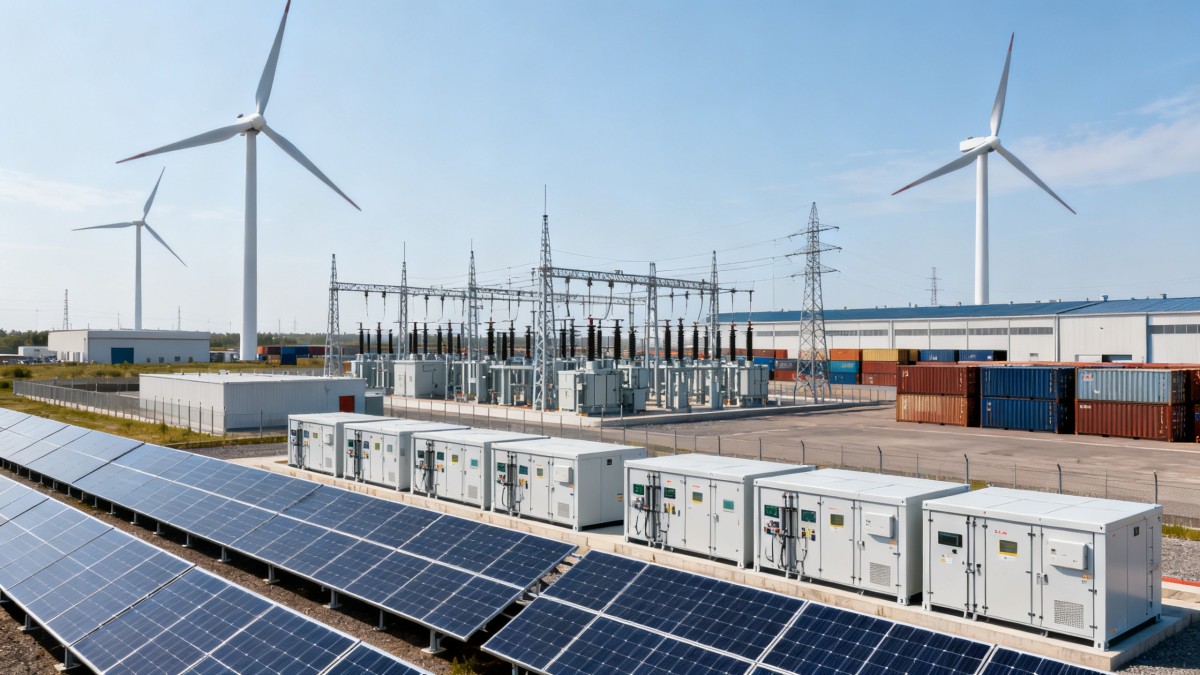
Clean Energy project financing in 2026 is shaped by three simultaneous forces: tighter capital discipline, faster technology deployment, and more visible supply chain exposure. For solar, wind, storage, hydrogen, grid modernization, and industrial decarbonization projects, lenders and equity partners now assess not only revenue potential but also procurement resilience, contractor capability, data transparency, and compliance readiness across a 12–36 month project cycle.
That shift matters across industries. A procurement manager wants predictable equipment delivery windows. A project owner wants bankability. A technical evaluator needs confidence in performance assumptions. A quality or safety lead wants traceable standards and risk controls. In practice, financing is now a cross-functional decision framework rather than a standalone treasury exercise managed by one team.
For many organizations, the old question was simple: can we raise capital? In 2026, the better question is: can we secure capital on terms that survive policy changes, interest-rate pressure, delayed interconnection, and component substitution? That is why project finance discussions increasingly include digital procurement records, dashboard-based progress reporting, and milestone verification from day 1 to commercial operation.
This is also where industrial intelligence becomes valuable. GIP helps decision-makers connect fragmented signals across Green Energy, Advanced Manufacturing, and Global Logistics. When a financing committee can compare lead-time patterns, review market-entry risks, and map supplier dependency before term-sheet negotiation, the probability of later-stage surprises drops meaningfully.
What lenders and investors are checking first
In most bankable projects, due diligence now starts with a short list of practical questions. These are not abstract finance metrics. They are execution filters that can determine pricing, covenant structure, and drawdown timing within 4–8 weeks of early review.
- Whether revenue visibility is stable through a PPA, contracted offtake, capacity payment, or a diversified merchant strategy with credible downside modeling.
- Whether EPC, O&M, and major equipment packages include clear delivery milestones, liquidated damages language, and substitution controls for critical components.
- Whether policy eligibility, permitting status, land rights, grid access, and environmental review are advanced enough to avoid financing delays during the next 2–3 approval gates.
- Whether project reporting can support monthly lender updates, quarterly compliance checks, and rapid exception reporting when cost or schedule drift appears.
The practical financing stack in today’s market
Very few projects rely on a single source of capital. A common stack may combine sponsor equity, development capital, construction debt, tax-related incentives where available, equipment leasing for selected assets, and refinancing after commissioning. The exact mix depends on project size, technology maturity, contract structure, and country risk.
The table below outlines how financing structures are commonly assessed in 2026. It is especially useful for enterprise decision-makers comparing flexibility, documentation complexity, and procurement implications before entering commercial negotiation.
The main takeaway is that financing choice affects procurement behavior immediately. A project funded on balance sheet may move faster in weeks 1–6, while non-recourse structures often require tighter package documentation and more formal change-control procedures. Teams that understand this early usually avoid avoidable rework.
Which risks now decide whether a project is financeable
In 2026, many clean energy projects fail to secure optimal financing not because the asset class is unattractive, but because risk is poorly translated into lender language. Industrial companies often know their technical scope, yet under-document schedule dependency, logistics fragility, and change-order exposure. Financing terms harden when risk is visible but unmanaged.
Across sectors, five risk groups appear repeatedly: policy risk, supply chain disruption, performance uncertainty, counterparty weakness, and reporting gaps. These risks apply to renewable generation, battery storage, energy efficiency retrofits, green hydrogen, and electrification projects alike. The common issue is not their existence; it is the lack of early mitigation evidence.
For example, a 6–9 month delay in transformer delivery can reshape debt draw schedules. A missing substitute supplier for inverters, membranes, or balance-of-plant components can change contingency assumptions. A weak O&M scope can reduce confidence in long-term availability. Investors increasingly ask for operational detail because cost of failure rises sharply after financial close.
GIP’s cross-sector intelligence model is useful here because financing risk rarely stays inside one function. It sits between manufacturing capacity, logistics reliability, local regulation, and commercial demand. Project teams that can align these signals into one decision narrative are typically better positioned in lender discussions and investment committee reviews.
A risk map that procurement and finance teams can use together
The following comparison table is designed for procurement officers, technical leads, and business evaluators who need a practical view of how common project risks translate into financing consequences and mitigation actions.
The financing impact is often indirect at first and severe later. A small reporting gap in month 2 can evolve into delayed lender approval in month 8. That is why high-performing teams combine technical diligence with operating controls, rather than treating finance, procurement, and project execution as separate workstreams.
Common blind spots that still weaken bankability
Several mistakes appear repeatedly across project pipelines:
- Assuming a low equipment price automatically improves financeability, even when it introduces warranty ambiguity or untested integration risk.
- Ignoring regional logistics constraints during vendor selection, especially when shipment windows exceed 10–14 weeks for critical electrical packages.
- Treating operational data as a post-commissioning topic instead of a lender requirement that starts during engineering and construction.
- Overlooking compliance documentation, such as grid-code conformity, environmental permits, or traceability records needed for internal audits and external review.
How to evaluate financing options, technology choices, and procurement strategy together
A bankable clean energy project in 2026 is rarely built by finance logic alone. It is built by aligning financing terms with technical design, delivery capability, and procurement strategy. If a project chooses aggressive pricing but cannot support performance guarantees or service access over 10–15 years, that financing advantage may disappear.
The smartest buyers now use a three-layer evaluation model. Layer one checks economic viability. Layer two checks technical and operational durability. Layer three checks execution realism, including vendor capacity, logistics path, and post-installation support. This approach helps procurement and project managers present a more credible approval package to internal and external stakeholders.
This is especially relevant for mixed portfolios. A distributed solar rollout across multiple sites requires one set of financing controls. A storage-integrated microgrid serving a factory or logistics hub may require another. Green hydrogen or electrified process heat projects usually face different diligence expectations because performance history, integration complexity, and offtake certainty vary.
When teams use market intelligence correctly, they do more than compare capex. They compare risk-adjusted delivery quality. GIP supports this by connecting deep-dive sector analysis with practical commercial interpretation, which is valuable for procurement staff, engineering leads, and enterprise decision-makers who need cross-border project visibility.
A practical 5-point procurement checklist for financeable projects
Before final supplier nomination, most project teams should verify at least five points. These checks are relevant across solar, wind, storage, charging, and broader industrial decarbonization programs.
- Confirm lead times for long-lead items such as transformers, switchgear, power conversion systems, or specialty process equipment, and validate whether the delivery window is 8–12 weeks, 12–20 weeks, or longer.
- Check warranty scope, service response times, and spare-parts coverage for at least the first 24 months of operation, especially where remote sites or harsh conditions apply.
- Assess substitute material rules and design freeze timing, because uncontrolled substitutions often create lender concern around acceptance tests and performance compliance.
- Review vendor financial resilience and execution references in similar environments, including export experience, documentation quality, and commissioning capability.
- Map digital reporting requirements early so cost, schedule, quality, and safety records can feed the same Business Intelligence dashboard used for management and lender oversight.
Comparison of project paths by complexity and financing fit
The table below helps compare typical project paths by complexity, contract intensity, and financing fit. It is not a universal rulebook, but it provides a practical framework for early-stage screening and internal discussion.
The project path shapes the financing path. Teams that match complexity with realistic contract and reporting architecture usually move faster from concept note to executable structure. Teams that underestimate integration and governance typically face more revisions during diligence.
What implementation, compliance, and reporting should look like from pre-FEED to operation
One of the strongest financing trends in 2026 is the demand for clearer implementation discipline. Investors want evidence that a project can move through pre-FEED, permitting, procurement, construction, testing, and operation with controlled handoffs. The stronger the implementation architecture, the more credible the financing case becomes.
A practical implementation model usually includes 4 stages: screening, diligence, execution, and operational stabilization. Depending on technology and geography, the full path may take 6–24 months. What matters is not speed alone, but the ability to show which decisions are fixed, which are conditional, and which require external approvals.
Compliance should be treated as a live workstream, not a final checklist. Common requirements may include electrical safety standards, environmental permits, grid-interconnection conditions, construction HSE controls, commissioning protocols, and document retention for audit purposes. Exact rules vary by country and technology, but disciplined evidence collection is universally valuable.
This is where digital reporting has moved from “nice to have” to “finance enabling.” A Business Intelligence dashboard that tracks capex drawdown, schedule variance, non-conformance logs, change orders, and site safety events can materially improve decision quality. It also helps enterprise boards and lenders review the same project reality without waiting for disconnected spreadsheets.
A simple implementation flow that reduces financing friction
- Stage 1, project screening: define demand profile, target technology, expected savings or revenue logic, land or site constraints, and likely permitting route within the first 2–6 weeks.
- Stage 2, diligence and structuring: validate technical assumptions, contracting model, financing structure, supplier shortlist, and risk allocation over the next 4–12 weeks.
- Stage 3, execution: manage procurement, logistics, site readiness, installation, inspection, and commissioning with weekly control points and monthly executive reporting.
- Stage 4, operational stabilization: verify availability, output, safety records, service responsiveness, and post-COD financial reconciliation during the first 90–180 days.
Why data governance is now part of project finance quality
Good data governance improves more than reporting neatness. It supports lender confidence, faster change approvals, and stronger portfolio comparison across sites and geographies. If a company is running 5, 15, or 50 energy assets, inconsistent definitions of downtime, capex category, or acceptance status can undermine strategic decisions.
For operators and project managers, the practical goal is simple: one source of truth for schedule, cost, quality, and performance. For finance teams, the goal is predictable drawdown and variance visibility. For executives, the goal is faster capital allocation. Clean Energy project financing increasingly rewards organizations that can connect all three.
Key questions buyers, operators, and decision-makers are asking in 2026
Search intent around clean energy project financing is becoming more operational. Buyers are not only asking how financing works. They also ask how long it takes, what can delay it, which project types are easiest to fund, and how to avoid procurement choices that later reduce bankability. That is why a focused FAQ section remains useful for industrial audiences.
How long does clean energy project financing usually take?
For relatively standardized commercial and industrial projects, early structuring and approvals may take 4–10 weeks if site data, energy profiles, and contract templates are ready. Utility-scale or infrastructure-heavy projects often require several months because land, permits, grid access, and technical diligence take longer. Delays are most common when project data is incomplete or major equipment strategy is unresolved.
What makes a project easier to finance?
Projects become easier to finance when they show stable revenue logic, clear scope boundaries, proven equipment pathways, and disciplined execution governance. Contracted offtake, mature technologies, independent engineering review, and visible supplier capacity all help. So does a realistic contingency range rather than an artificially compressed budget that cannot absorb normal project variation.
What should procurement teams prioritize first?
Procurement teams should prioritize lead times, substitution rules, warranty enforceability, and supplier documentation readiness before focusing only on nominal unit price. In financing terms, a cheaper package that increases completion risk can become more expensive overall. A good rule is to review at least 3 categories together: commercial price, delivery reliability, and bankability of technical documentation.
Are digital dashboards really useful in financing discussions?
Yes, especially for multi-site portfolios, phased rollout programs, and projects with milestone-based disbursement. A well-built dashboard can track capex use, installation progress, site risks, and testing status in one place. It becomes particularly useful when updates are needed weekly for internal management and monthly for lenders, investors, or audit stakeholders.
Why industrial teams work with GIP when financing decisions need more than headlines
When Clean Energy project financing becomes more complex, decision-makers need more than fragmented market updates. They need connected industrial intelligence that explains how policy, equipment supply, project delivery, and capital structure interact. That is where GIP delivers practical value for researchers, procurement professionals, technical reviewers, project leaders, and enterprise executives.
GIP’s strength lies in linking Green Energy with the wider industrial ecosystem. A financing decision may depend on manufacturing lead times, logistics volatility, digital reporting maturity, and regional market signals at the same time. By integrating Resource Centers and Deep-Dive Insights across sectors, GIP helps teams reduce blind spots before they become commercial or financing problems.
If your team is evaluating a clean energy investment, a new project rollout, or a cross-border supplier strategy, the most useful discussions usually start with concrete questions. These may include target project structure, technical package selection, likely delivery windows, reporting framework, compliance priorities, and market-entry risk across the next 6–18 months.
You can contact GIP for actionable support around project financing frameworks, procurement and vendor screening, delivery-cycle assessment, dashboard design logic, compliance checkpoints, and quote-stage intelligence. That makes conversations more productive for both first-time project sponsors and experienced industrial operators who need sharper, faster, and more bankable decisions.
What you can discuss with our team
- Parameter confirmation for project size, technology pathway, and implementation milestones.
- Financing-fit review based on revenue structure, supply chain exposure, and execution readiness.
- Procurement strategy support covering vendor comparison, lead-time analysis, and substitution risk.
- Delivery-cycle discussion, compliance document priorities, and dashboard-oriented reporting design.
- Commercial planning support for quotation alignment, portfolio screening, and region-specific market intelligence.
- Advanced Manufacturing
- Global Logistics
- Green Energy
- Industrial Intelligence
- Supply Chain
- Business Intelligence
- Digital Transformation
- Clean Energy
- Industrial Ecosystem
- Supply Chain risk management
- Business Intelligence dashboard examples
- Supply Chain digital transformation
- Clean Energy project financing
Related News
Get weekly intelligence in your inbox.
No noise. No sponsored content. Pure intelligence.
